
India’s culture is often referred to as a vibrant tapestry, and rightly so. It is an amalgamation of colourful weaves of religions and cultures from around the world, and the monuments of the country reflect the same. Be it the grand temples of South India, the palaces of the Mughals or the Portuguese churches and colonies, the country’s architectural heritage is its pride. However, the problem of vandalism of sites of historical and cultural importance poses a grave threat to the preservation of this tapestry.
It is not unusual for someone who is visiting these monuments to find declarations of love and friendship, and even profanities etched into the walls and pillars of the structure. Such acts are a clear indication of the lack of awareness amongst the general public regarding the importance of maintaining the sanctity of such historical monuments.
Under Attack: Hampi, Nilgiri Rock Art, & Jallianwala Bagh
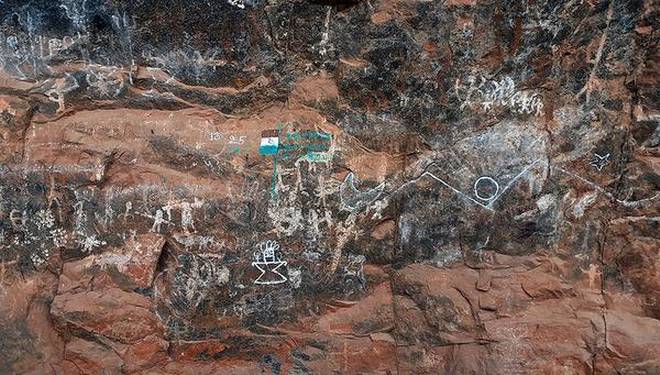
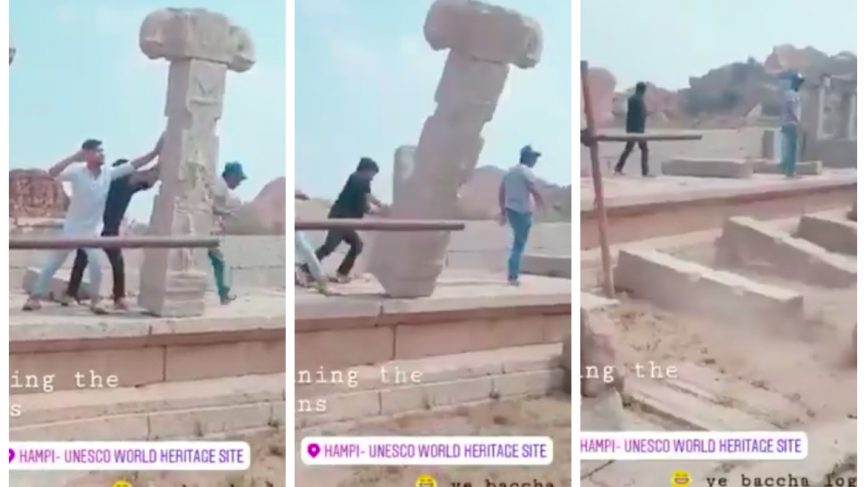
A video that surfaced earlier this year of a group of men pushing down several pillars at the UNESCO heritage site of Hampi made everyone jump to action to restore the site and to seek justice against the vandals (watch India Today coverage). In the meantime, a pre-historic site at Karikiyoor in the Nilgiri forests faces a similar threat posed by trekkers and has been begging for adequate action from the government authorities for several years. The site contains rock art dating back to possibly 10,000 BC, and is accessed unlawfully and vandalised with names and symbols (read the TOI and The Hindu coverage).
Other than these, the walls of Jallianwala Bagh, that bear the bullet holes from the tragic civilian massacre of 1919, are covered in hearts and initials of its visitors today (read the Indian Express coverage). All these locations carry great importance in understanding the country’s expansive history, with Hampi being a globally recognised architectural marvel. Despite this, the reluctance of India’s own citizens towards preserving these sites is a cause of great concern.
Playing Our Part
One of the most powerful tools towards combating the problem of vandalism in India is raising awareness regarding the value of heritage sites. FlippAR has always stood for the celebration of India’s heritage. Understanding that in a city such as Bengaluru, where a majority of the crowd walked past important historical sites without knowing their significance made us introduce initiatives such as Pledge2Protect and Heritage Walks in the city.

Through Heritage Walks, we toured groups of locals and tourists through the tales of the city’s most popular areas; and through Pledge2Protect, we introduced young minds to the vibrant history of the country.