
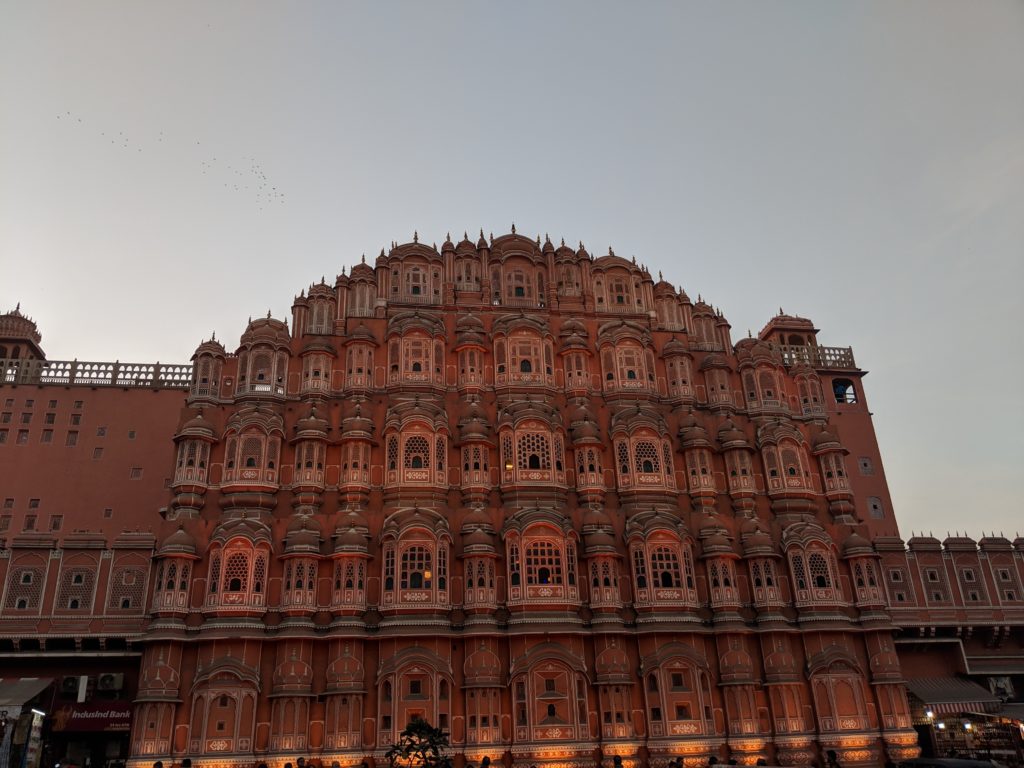
History of the Majestic Hawa Mahal
Unlike many other ruling empires, the Mughals and Rajputs shared a fairly amicable relationship, with very few exceptions. This from the time of Mughal emperor Akbar who married a Rajput princess. Hindu princesses marrying Mughal princes was not uncommon.
In turn, the Rajput kings received partner like benefits from the Emperors – highly respectable positions in their court, an assurance of no war or attack, a land that could be passed on to their successors, and a hefty salary among others.
It is also believed that the Mughals influenced the Rajputs to some extent. The Purdah system followed by the Rajputs is believed to have strengthened with the arrival of the Mughals. As per this custom, the women were to keep themselves behind a veil or screen in the presence of men. A system prevalent mostly in the higher class of women, it kept the Royal women in a strict confinement, cut off from all royal processions and outside world.
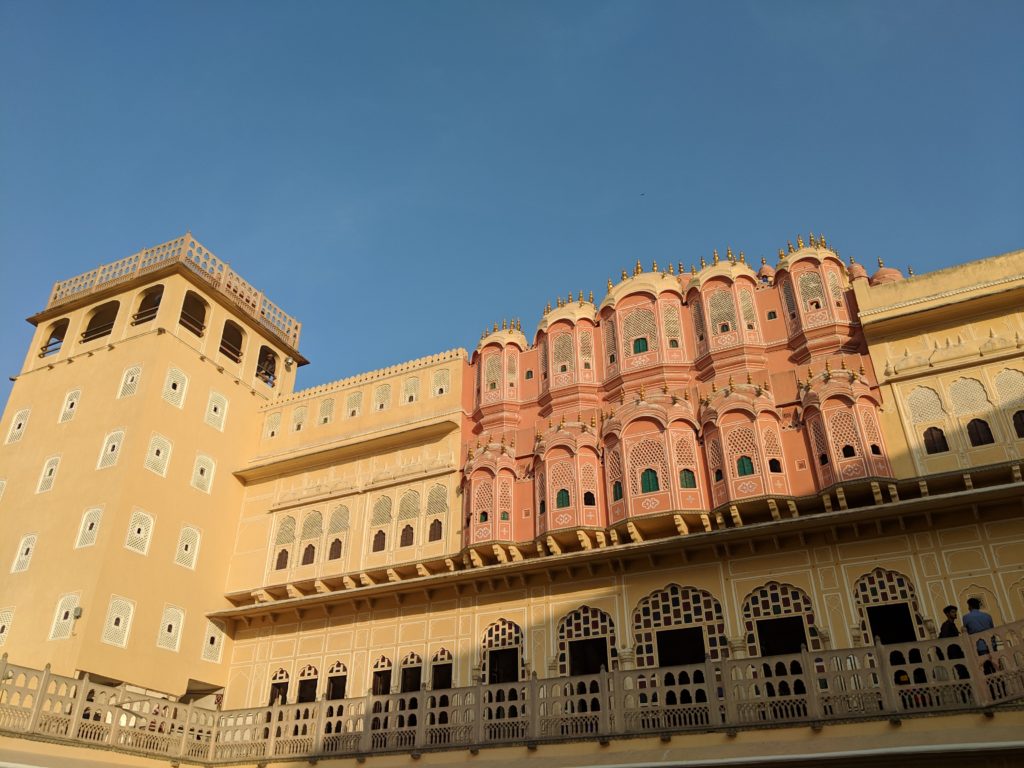
The Hawa Mahal was thus built on the instructions of Sawai Pratap Singh in 1799. A Kachwaha Rajput ruler, he was the grandson of the man who built the city of Jaipur, Maharaja Sawai Jai Singh. Raised as an extension to the City Palace, the Hawa Mahal was conceptualized to unbind the women while still persisting with the tradition of purdah.
The queens and princesses would come here through a hidden passage that connected the two. A unique concept, the Mahal ensured that while the women could watch all royal proceedings, the onlookers had no way of doing so. It’s unique architecture, which looks like a honeycomb, has as many as 953 windows. The windows also allow a constant breeze through the mahal, keeping the temperatures pleasant. It is perhaps why the palace got its name of Hawa Mahal or the Hall of Winds.
The architecture of Hawa Mahal
A blend of Mughal and Rajput architectural style, the facade of the Hawa Mahal is the most fascinating. It’s what the iconic structure is most associated with. The Mahal is punctuated with as many as 953 small windows or jharokhas, on a wall that is barely a foot wide. The numerous small sized windows help aid air circulation and in keeping the temperature down.
The five storey structure is believed to be built to resemble the crown of Krishna, a Hindu God. This because, Sawai Pratap Singh was known to be a devout follower of Lord Krishna. Within the complex are temples, a main courtyard on the ground floor and two more on the first two storeys. The storeys above these are only a single room wide.
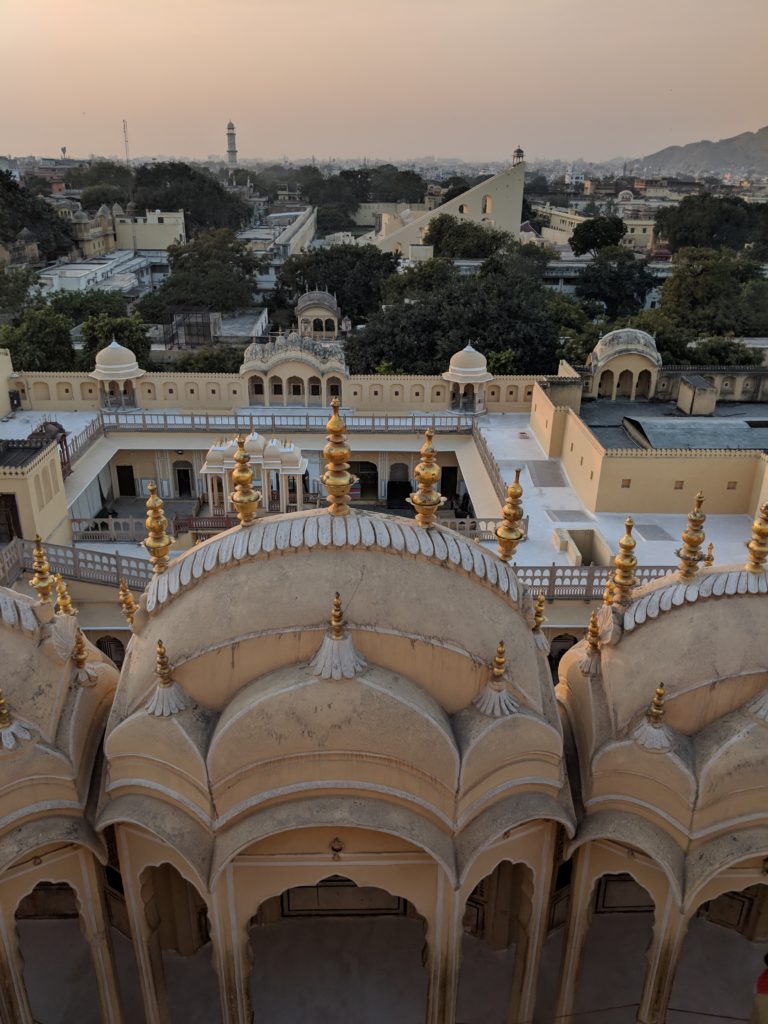
Interestingly, the entire palace is devoid of stairways and the only way to the top is through a ramp. The queens who were clad in very heavy garments would be carried to the the top in a palanquin, the true royal way.
Points of Interest:
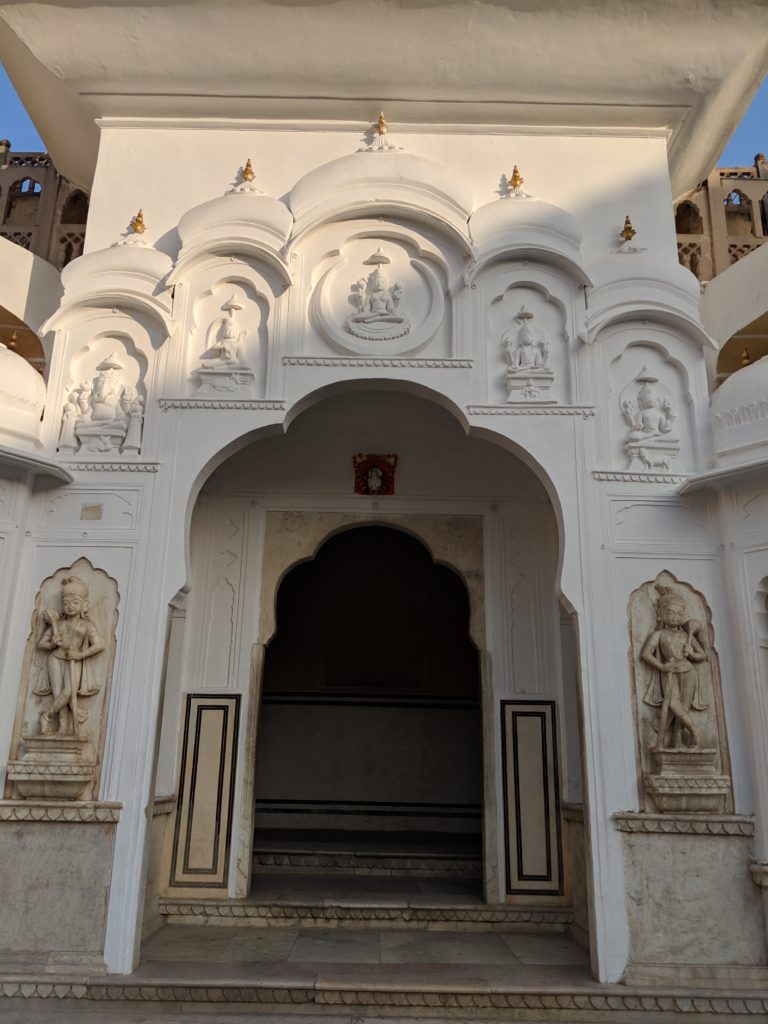
The entrance doorway of the Chandrapol is embellished with dvarpalas, the guardians of the doorway. The top of the doorway displays Hindu Gods and Goddesses seated under their sacred umbrellas can be seen Ganesha, Shiva, followed by Lakshmi sitting in the crescent of the moon, her husband Vishnu to her right and finally, Kalki, an avatar of Vishnu. This perhaps a symbolic way of seeking their blessings prior to entering. A courtyard greets you here.
Read about : Exploring the Golden Triangle with FlippAR Go
The main courtyard on the ground floor has a fountain in the middle and a doorway leading to the upper storeys. During Holi – the festival of colour, it is said that this fountain would be filled with coloured water, perfume and even laced with opium at times. The women celebrated the festival in great splendour dressed in absolute fineries, free from the outside world.
The first two storeys have courtyards starting with the Sharad Mandir on the first floor. It is said that autumn celebrations took place on this floor.
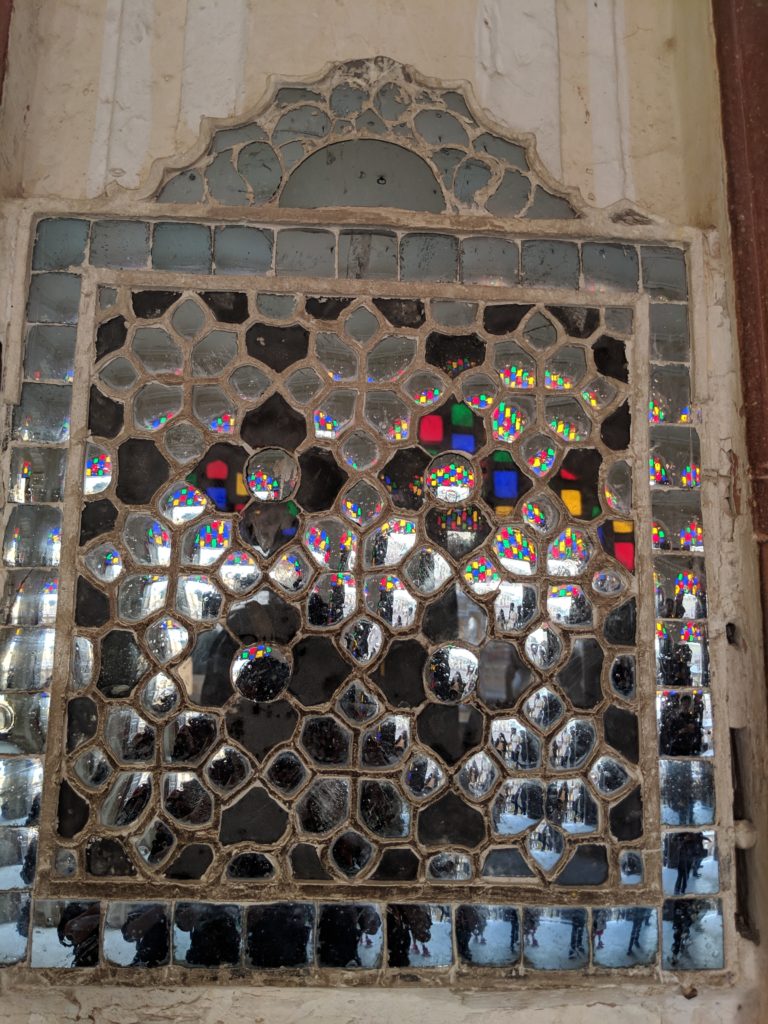
On the second floor is the coloured stain glass and mosaic work embellished Ratan Mandir, flanked by two open terraces. The stained glass helped illuminate the room, filling it with numerous hues.
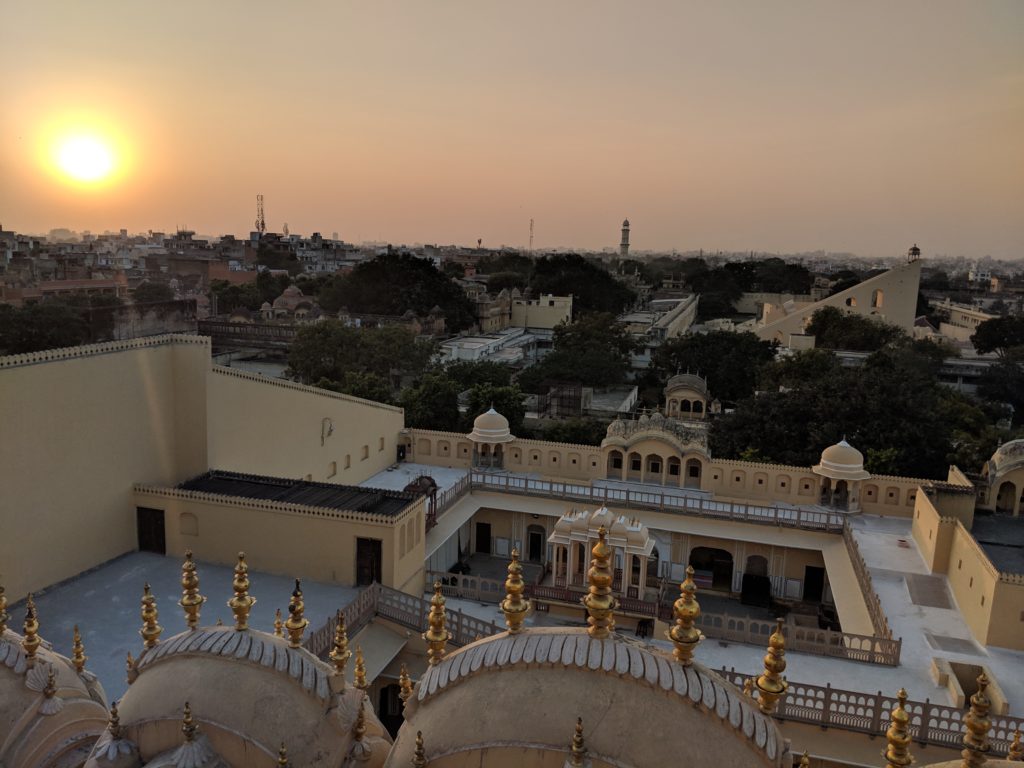
Vichitra Mandir, on the third floor is the place where the king worshipped Krishna, whereas Prakash Mandir on the fourth is known to be the place where he spent time writing poetry. Hawa Mandir or the top floor offers a mesmerizing view of the Pink City.
The pink honeycomb structure designed by Lal Chand Ustad is built from pinkish red sandstones complimented with inlay of white marble. Interestingly, the architecture on the inside is rather plain when compared to the elaborate facade.