
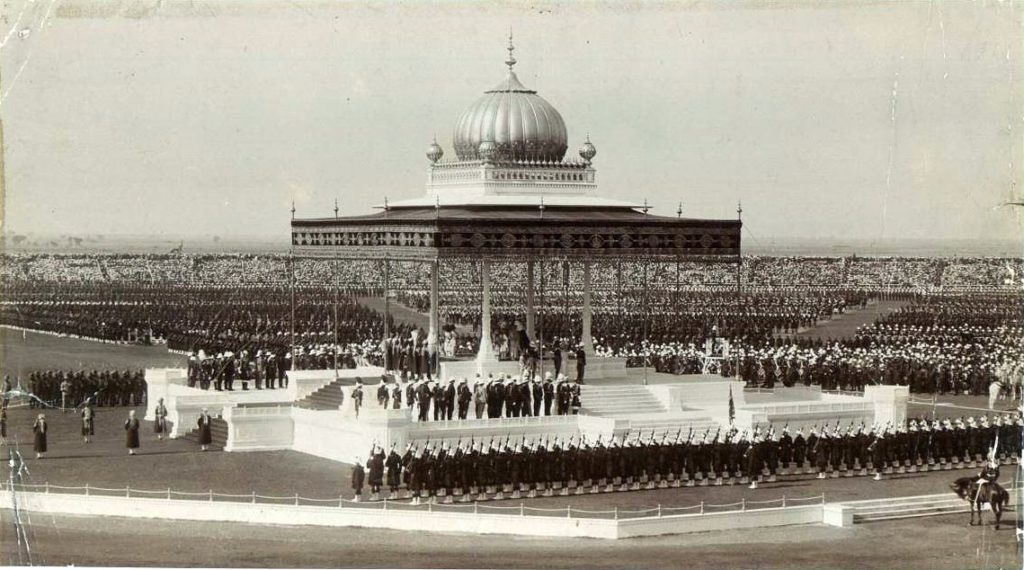
Durbar – a concept that was introduced to India by the Mughals, was quickly adopted by the ones who followed soon after – the British. Like the Mughals, the British held their own durbars – where members congregated, but in this case, mostly to celebrate.
In the tenure of British Raj, there were three durbars held and of
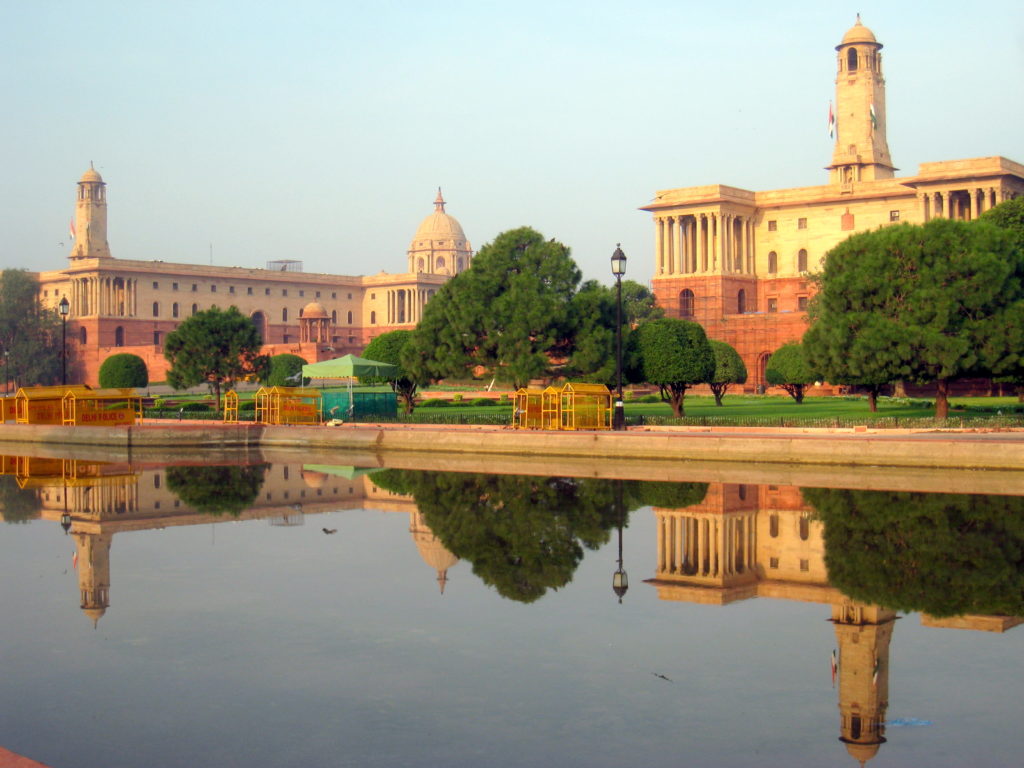
With the capital shifting, there was need for a residence for Lord Irwin, the then Viceroy of India. This august and awe-inspiring structure was hence built – to establish the imperial dominance and power of the Raj.
The Viceroy’s House, as it was known back then, served viceroys from Lord Irwin to Lord Mountbatten. Since then, the H-shaped building covering 5 acres on the 330-acre estate has witnessed numerous noteworthy ceremonies. It was under the central dome of this building that the newly appointed Prime Minister of a free India took his oath in 1947.
Viceroy’s House metamorphosed into the Government House in 1947 and thereafter to the Rashtrapati Bhavan – the house of the President. Its first Indian resident was the first Governor-General of India, C. Rajagopalachari.
The men behind the construction of this grand structure were Sir Edwin Lutyens and Herbert Baker. Its conceptualisation is attributed to Sir Edwin Lutyens.
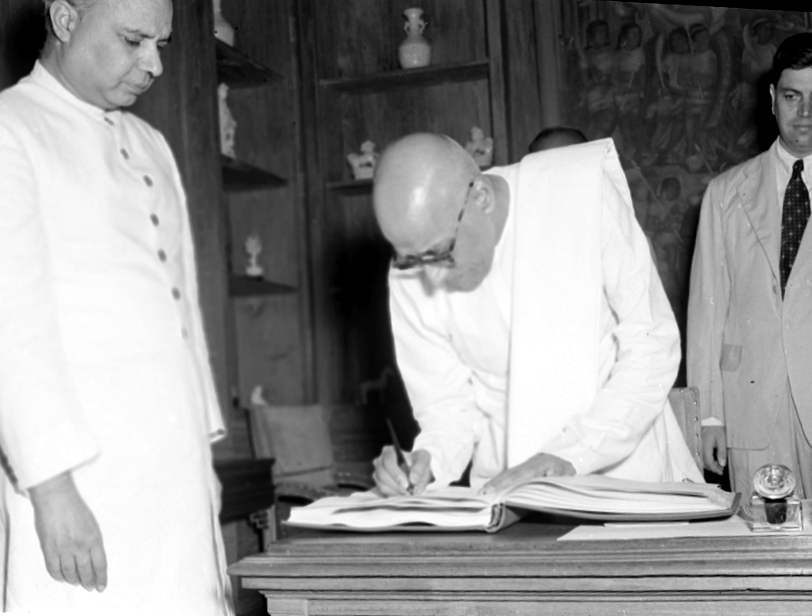
Rashtrapati Bhavan has 340 rooms, spread over 4 floors. However, the grandeur of the Viceroy’s room was too much for the humble Governor-General C. Rajagopalachari, who instead shifted to smaller rooms. These are today the family wing.
The name Rashtrapati Bhavan was arrived at during the term of President Dr. Rajendra Prasad
Architecture
About 4000 acres of land was acquired for the construction of the Viceroy’s House and the Secretariat building.
This building sits over 130 acres it. It has over 340 rooms, distributed over 4 floors. Although a British architect, Sir Lutyens ensured that the building reflects Indian architecture.
He incorporated the Indo-Saracenic style in designing the outer structure of the building, the stone basins at the top, the chajjas or canopies that kept the harsh sun rays and the rain away, and the chattris or umbrellas on the roof that broke the monotony of the roofs.
The eastern side of the building has 12 massive columns. The designs on these are inspired by the Hindu and Buddhist Temples. The windows on the side of the building derive inspiration from the Sanchi Stupa and other Mughal and European style buildings.
Points of Interest
The Durbar Hall holds a high chair for the President. The room has a capacity to hold 500 people. This was initially known as the Throne Room as it had two thrones, one for the Viceroy, and the other for the Vicerine.
Apart from the chandelier that hangs above the Presidential seat and the ancient Buddha statue, the Durbar Hall is quite bare.
The Ashoka Hall is the most attractive room in the building. Initially designed as the state ballroom, the hall has a beautiful Persian painting on the ceiling, interestingly painted walls and a wooden floor.
The Mughal Gardens at the back of the building boasts of both Mughal as well as English style of landscaping. These gardens are open for general public viewing only in February, during a festival known as Udyanotsav.